

By Caroline Hartigan BFS CFP® QFA
There can be a point in your financial life when progress becomes harder to judge.
Your income has increased. You’re contributing to a pension. You may have investments, savings, a mortgage, property or other assets. Perhaps you’re putting money aside for your children or considering what you want your strongest earning years to achieve.
There’s plenty happening financially.
The useful question at this stage is: Is everything pulling in the same direction?
For professionals and business owners building wealth, individual financial decisions can accumulate over many years. Each may have made sense when it began. Looking at them together can tell you something more useful about where your financial progress is actually taking you.
Key Takeaways
- Financial decisions made at different stages of your life may need reviewing together as your circumstances develop.
- A clear destination can help you decide what role your pension, investments, savings and other assets need to play.
- Higher income can create more choices about how you use additional money.
- A defined investment strategy can provide a useful reference point when markets or circumstances change.
- The value of building wealth becomes more tangible when it starts creating meaningful options in your life.
Give your financial progress a direction
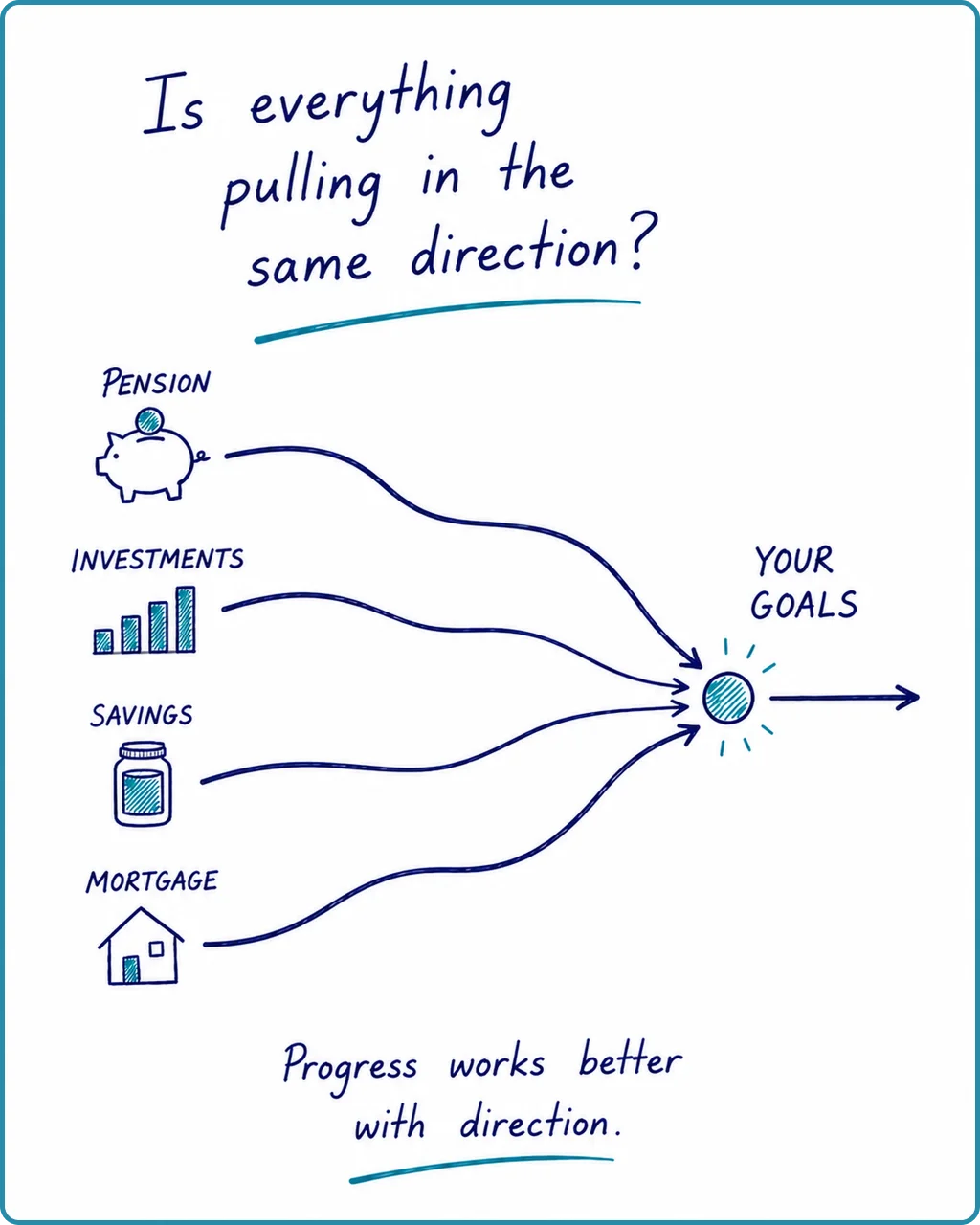
Most people don’t establish every part of their finances at the same time.
Your pension may have started with an employer years ago. An investment might have followed a bonus or a period of stronger earnings. Cash reserves have grown. The mortgage has reduced. Your income, family circumstances and ambitions may also look very different now.
This can leave you with several individually sensible financial arrangements that were established for different reasons at different points in your life.
A useful exercise is to ask what each one is expected to do.
What future income does your pension need to support?
What is the purpose of your investments?
How much cash do you want readily available, and why?
Where does reducing debt sit alongside building longer-term assets?
Your answers give those different financial decisions a common destination.
We always recommend being clear about your goals and timeframe when considering investments, alongside factors such as risk, access to your money, taxes and charges.
That wider context matters because accumulating more wealth is only one part of the picture. Knowing what you want that wealth to achieve gives your progress direction.
Decide what additional income needs to do
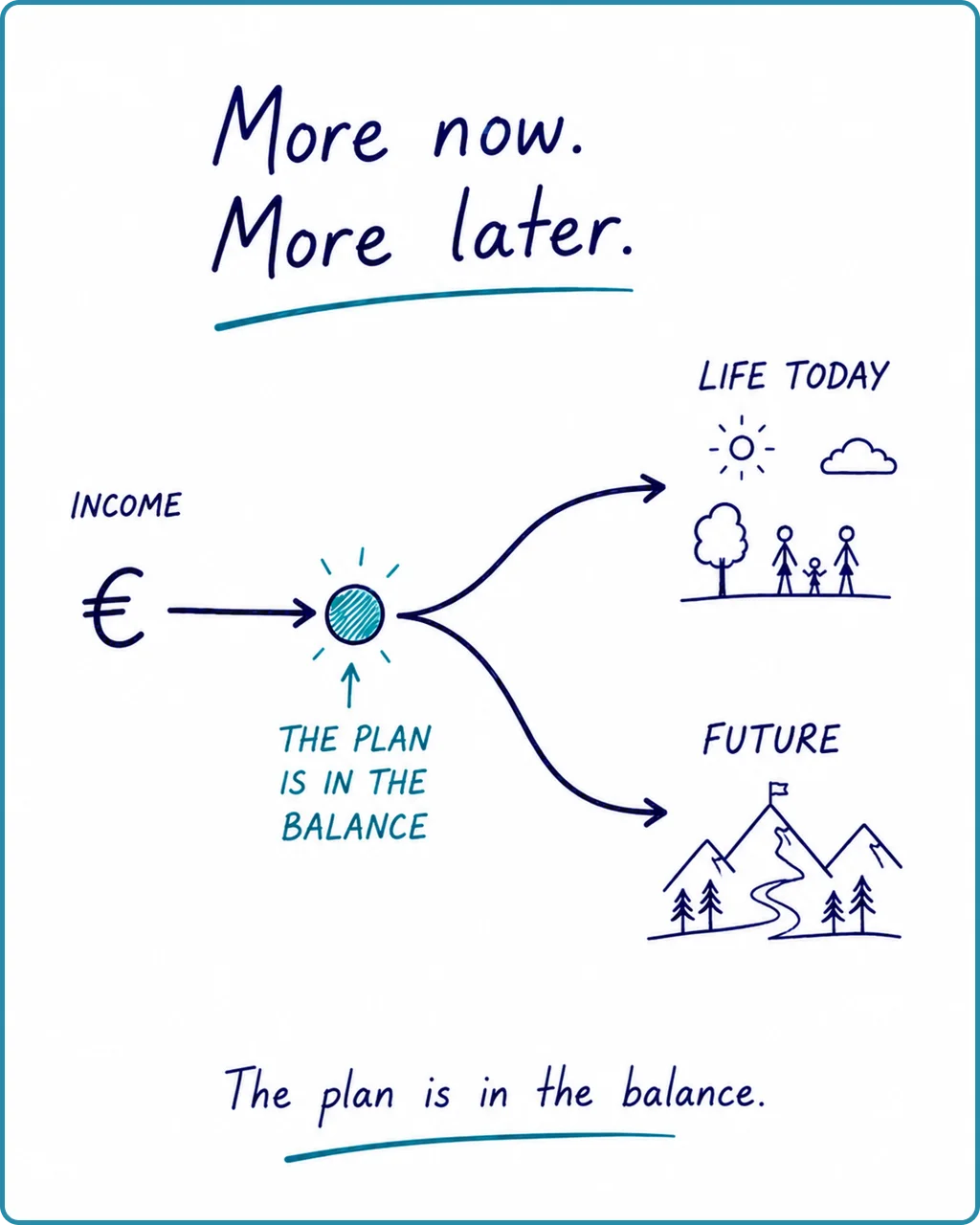
Success can create an interesting financial challenge.
Your income rises and there is more available after regular commitments are covered. That creates choices.
You could increase pension contributions, add to investments, reduce the mortgage, build cash for another objective or use more of your income for life today.
Several of those decisions may be perfectly reasonable.
What matters is understanding which ones fit your circumstances and what you’re trying to achieve.
For example, someone with significant accessible savings may make a different decision about their next €1,000 than someone whose wealth is largely tied up for the long term. A person planning a career change in three years may think differently about liquidity than someone focused primarily on retirement twenty years away.
Tax treatment, investment timeframe, risk and access can also affect the decision.
A financial plan provides the context for deciding where additional money can be most useful now.
Know when a decision can wait
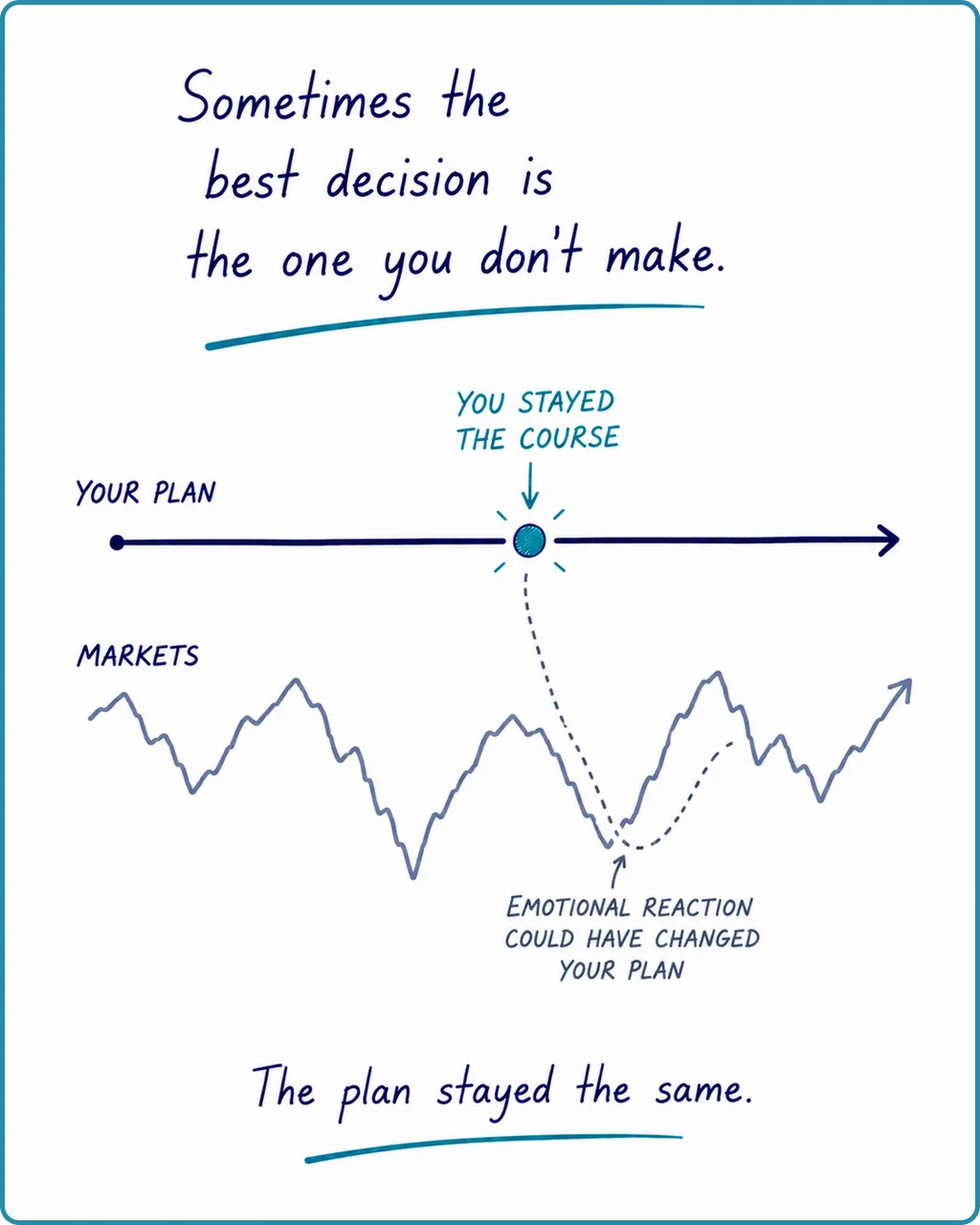
Financial markets have a remarkable ability to make long-term decisions feel urgent.
A sharp fall. A strong rally. An unsettling headline. A new investment opportunity that suddenly seems impossible to ignore.
Those moments can create pressure to act.
A defined financial strategy gives you a reference point before making that decision.
Has your objective changed?
Has your timeframe changed?
Has your financial position changed?
Has your capacity or attitude towards risk changed?
There will be times when those answers justify reviewing your approach.
There will also be times when a review confirms that your existing strategy remains appropriate.
We recommend reviewing investments regularly and when circumstances change. That review should consider factors including performance, fees, charges and whether investments remain on track towards their objectives.
Choosing to maintain an existing strategy after reviewing it can be every bit as deliberate as making a change.
Let progress create useful choices
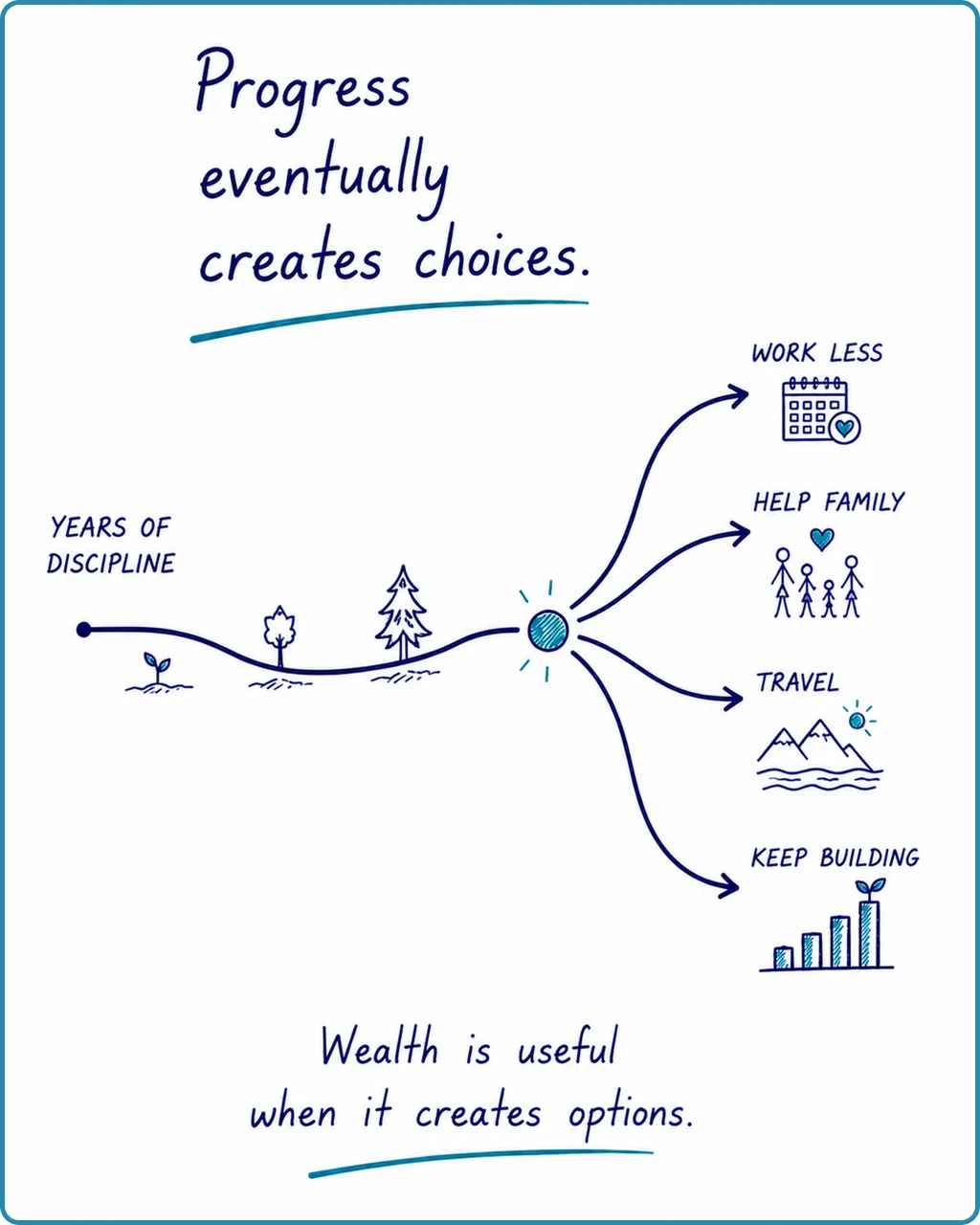
Building wealth can become very numbers-focused.
You watch pension values, investment balances, savings and mortgage debt. You might track your overall net worth from one year to the next.
Eventually, those numbers can start influencing decisions that have very little to do with spreadsheets or pension statements.
Perhaps you want the option to work differently later in your career.
You may want greater capacity to support your family.
Travel could become more important.
Or you may enjoy your work, remain ambitious and decide to keep building for another decade.
The interesting part is having a stronger financial position from which those decisions can be made.
This is where financial progress begins to have a practical effect on life. Your wealth has been accumulated for a reason, and over time it can give you a broader range of choices about what happens next.
Wealth becomes particularly useful when you understand the options it is creating.
Questions Wealth Accumulators Often Ask:
How do I know if my finances are working together?
Start by identifying what each major part of your financial position is intended to achieve. Consider your pensions, investments, savings, debt and other assets alongside your short, medium and longer-term objectives. The aim is to understand how the individual decisions contribute to the same wider plan.
Should I invest more or pay down my mortgage?
Both can be reasonable uses of surplus income. Your mortgage rate, investment timeframe, attitude and capacity for risk, liquidity requirements, tax position and wider objectives can all influence the decision. Comparing the options within your complete financial position is more useful than considering either one in isolation.
How often should I review my financial plan?
Regular reviews provide an opportunity to check whether your financial arrangements still reflect your circumstances and objectives. A significant change in income, family circumstances, career plans, business position or financial goals can also provide a natural reason to review your plan. For investments specifically, the CCPC recommends setting a review date at least annually and reviewing when relevant circumstances change.
Give your wealth a common destination
This month, our From the Advisor’s Notebook series is looking at MOMENTUM and a question that becomes increasingly relevant as financial lives become more established:
“We’re doing well financially, but is everything working together?”
One way to begin answering it is to look beyond individual balances and ask what your financial position is expected to make possible over the years ahead.
That destination gives context to the decisions you’re making today.
For financially focused professionals and business owners in Galway and across Ireland, O’Leary Financial Planning can help bring pensions, investments, savings and wider financial decisions into a plan built around what you want your wealth to achieve.
If you’d like to look at how the different parts of your finances fit together, arrange a 25-Minute Quick Chat with Caroline Hartigan at O’Leary Financial Planning or email us at advice@olearys.ie.
Caroline Hartigan is a Financial Advisor at O’Leary Financial Planning in Galway.
Caroline believes that good financial outcomes come from solid frameworks, not chance. She helps clients bring order to their finances, creating clear, evidence-based plans that balance growth with protection. She helps clients move beyond short-term thinking to enjoy lasting security and independence.