

By Mary Burke BA (HONS), QFA RPA
Starting or growing a family has a way of making several financial priorities arrive at once.
There may be a mortgage or plans to buy a home. Childcare and everyday costs are competing with savings. You know the pension matters. You may be thinking about financial protection. And somewhere in all of that, you still want to enjoy family life today.
For many young families, the problem isn’t a lack of sensible financial goals.
It’s knowing what to do first.
Good financial planning for young families helps put competing priorities in an order that makes sense for your family. You don’t need to address everything at once.
Key Takeaways
- Not every financial priority needs the same attention at the same time.
- Planning for tomorrow shouldn’t mean continually postponing life today.
- Emergency savings and appropriate financial protection can help your family prepare for the unexpected.
- Starting with manageable financial decisions can be more useful than waiting for the “perfect” time.
- Your priorities should change as your income, family and circumstances change.
Start by putting your financial priorities in order
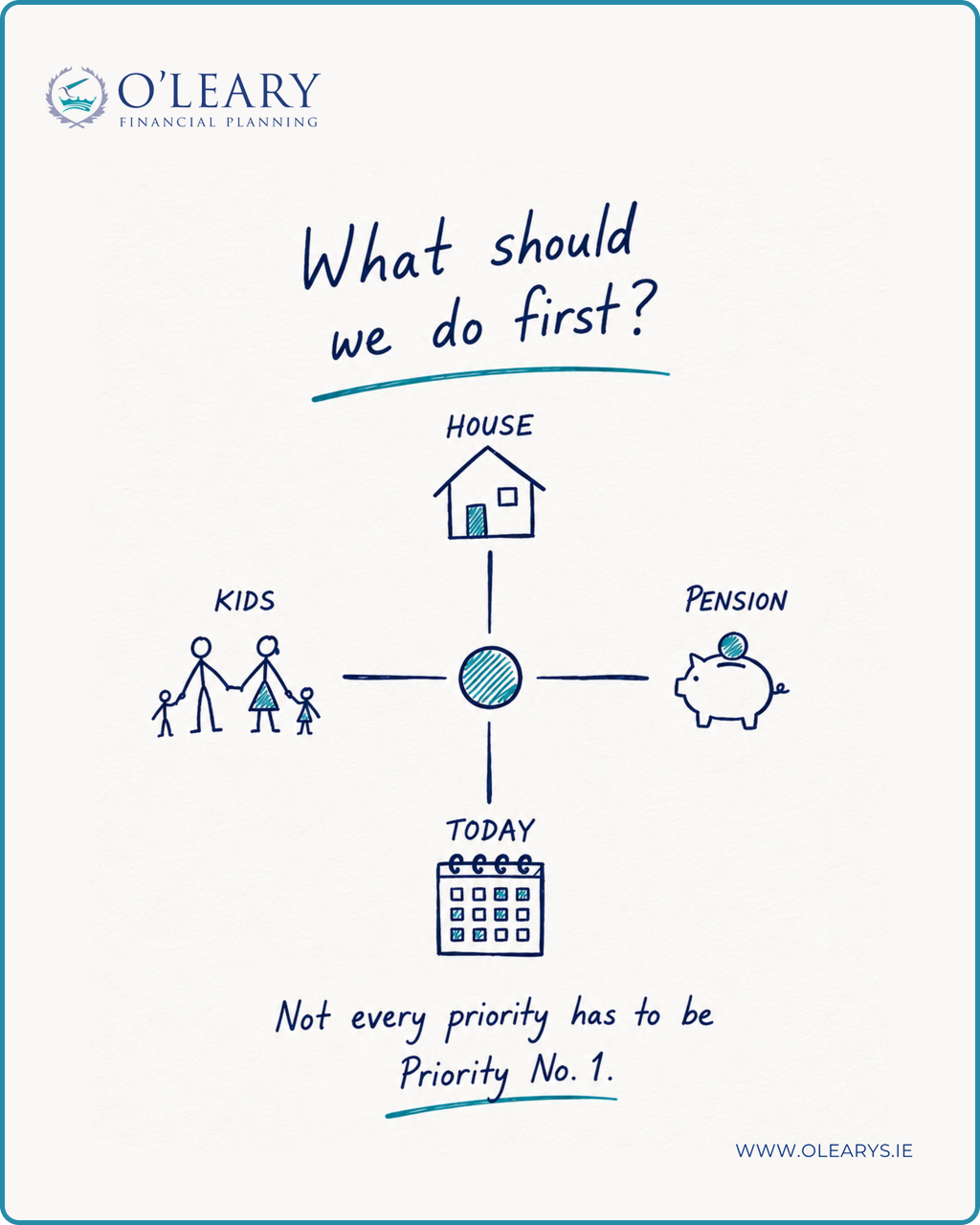
A home. Children. Savings. Pension. Protection. Holidays. The cost of everyday life. They can all matter.
The mistake is assuming they must all be addressed with equal urgency.
For one family, strengthening their emergency reserve may deserve immediate attention. Another may need to understand their existing protection. Someone else may have allowed retirement planning to slip down the list for too long.
There isn’t one universal order.
A financial plan helps establish what needs attention now, what comes next and what can reasonably wait.
That distinction can make a long financial to-do list feel considerably more manageable.
Make room for today as well as tomorrow
Young families can feel considerable pressure to make the financially “responsible” decision.
Save more. Pay more off the mortgage. Increase the pension. Put more aside for the children.
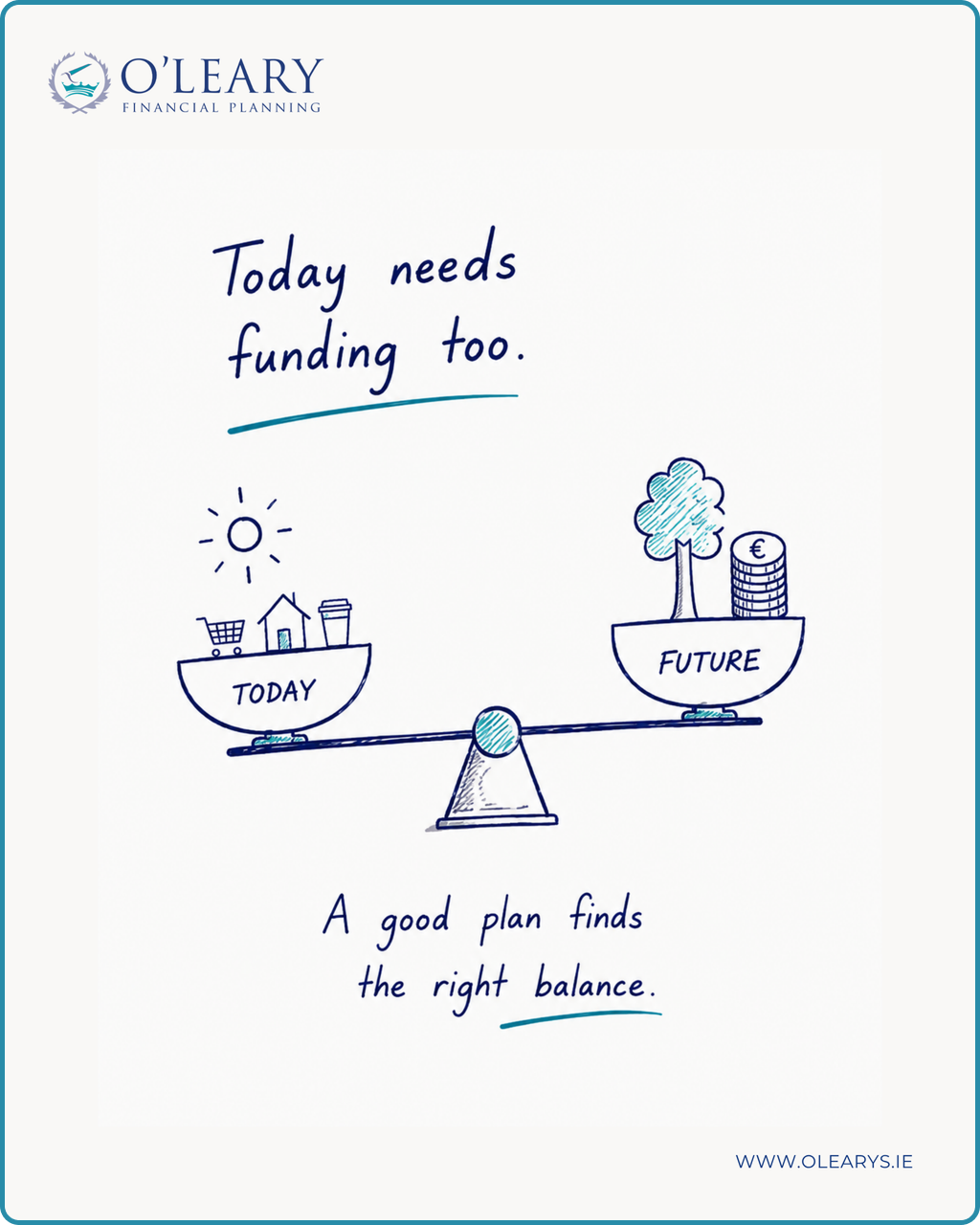
All may be sensible. But life today needs funding too.
Family experiences, holidays and enjoying your home are legitimate uses of money. Understanding what you’re working towards helps you make more considered decisions about how your money supports both today and tomorrow.
A good financial plan shouldn’t automatically tell you to spend less. It can help you understand what you can afford to spend while still making appropriate provision for the future.
Prepare for what you hope never happens
Some of the most important parts of family financial planning are the ones you hope you’ll never need.
What happens if household income unexpectedly changes?
Could you meet your regular commitments?
What financial protection is already in place?
How long could your savings provide breathing room?
Having children can affect income, working arrangements and pension provision, while bringing additional financial responsibilities. Ireland’s Competition and Consumer Protection Commission specifically encourages families to consider areas including budgeting, childcare costs, benefits, pensions and savings as circumstances change.
Knowing you’ve considered the unexpected can bring reassurance when life doesn’t follow the plan.
Small financial decisions have time to develop

A common reason for postponing financial planning is:
“We’ll do it when we have more spare money.”
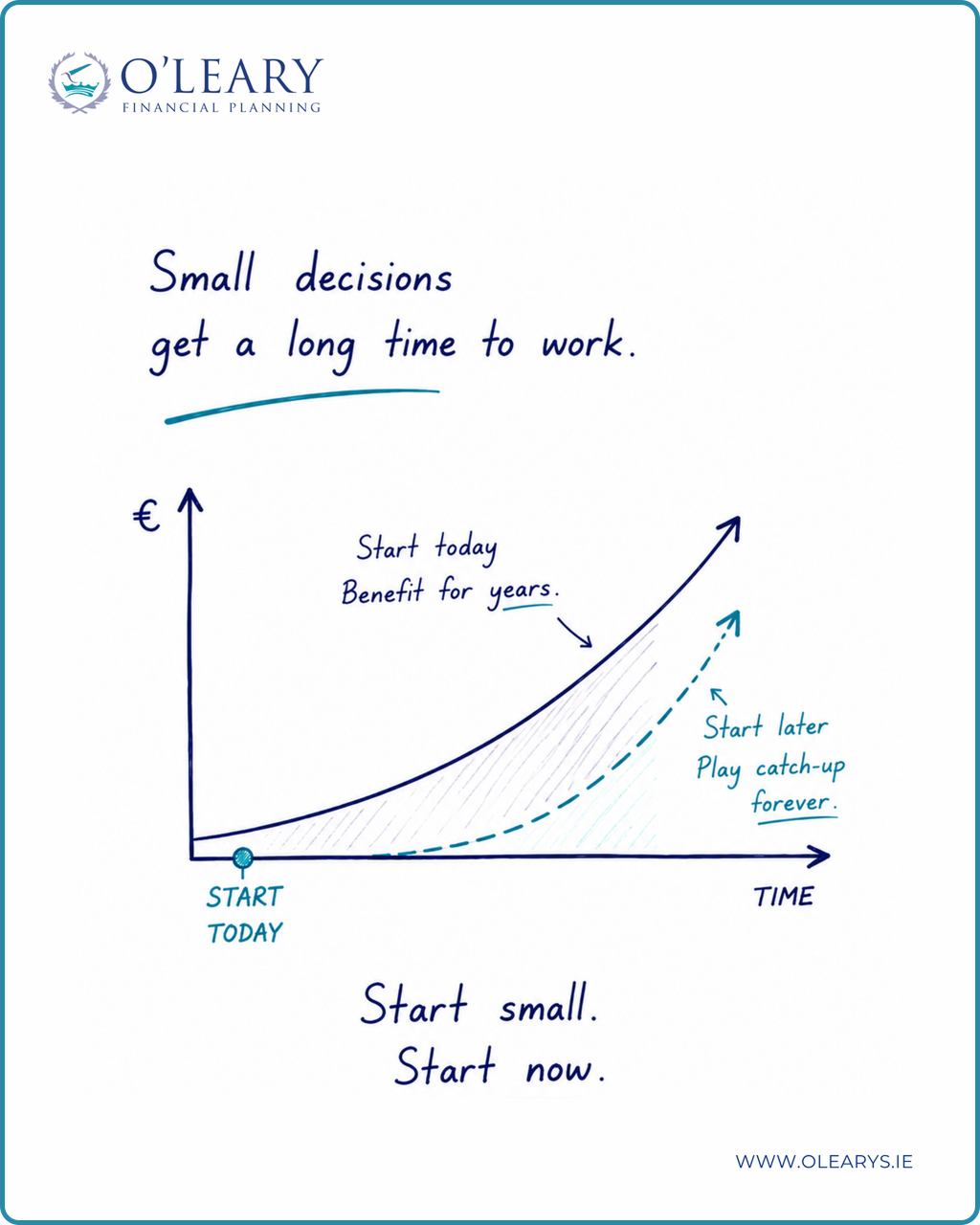
For a growing family, that perfect moment may be difficult to find.
There will always be competing demands.
Starting doesn’t mean solving everything. It could mean establishing a regular savings habit, reviewing your pension, understanding your protection arrangements or simply deciding which financial priority comes next.
The important thing is creating a foundation you can adjust as your circumstances change.
Questions young families often ask
What should a young family prioritise financially?
There is no universal order. Your income, debt, mortgage, savings, family responsibilities, existing protection and longer-term objectives all matter. The first step is understanding your complete position before deciding what deserves attention first.
Should we save for our children or our retirement?
It doesn’t have to be an either/or decision. The appropriate balance depends on your resources, time horizons and objectives. Your own longer-term financial security also deserves consideration when deciding how much support to provide for children.
When should we speak to a financial advisor?
You don’t need to wait until you have substantial wealth. Marriage, buying a home, having children, changing career, increasing income or simply feeling unsure about competing financial priorities can all be useful points to review your finances.
Build your financial foundation around your family
Financial planning for young families isn’t about having everything sorted.
It’s about understanding what matters now, what comes next and what you’re building towards.
For families in Galway and across Ireland, O’Leary Financial Planning helps bring those individual decisions together into a personalised financial plan.
OLFP’s approach is centred on helping clients understand their position and work towards financial independence on their own terms.
If you’re wondering where your family should start, let’s start with that question. Book your 25-Minute Quick Call with O’Leary Financial Planning.
For personalised advice on getting your financial priorities in order, arrange a Quick Chat with Mary Burke at O’Leary Financial Planning or email us at advice@olearys.ie
Mary Burke is a Financial Advisor at O’Leary Financial Planning in Galway. She works with individuals, couples and growing families to help them make sense of competing financial priorities, from saving and pensions to protection and planning for the years ahead. Her focus is on providing practical, personalised advice that helps clients feel more confident about the financial decisions they’re making for themselves and their families.